
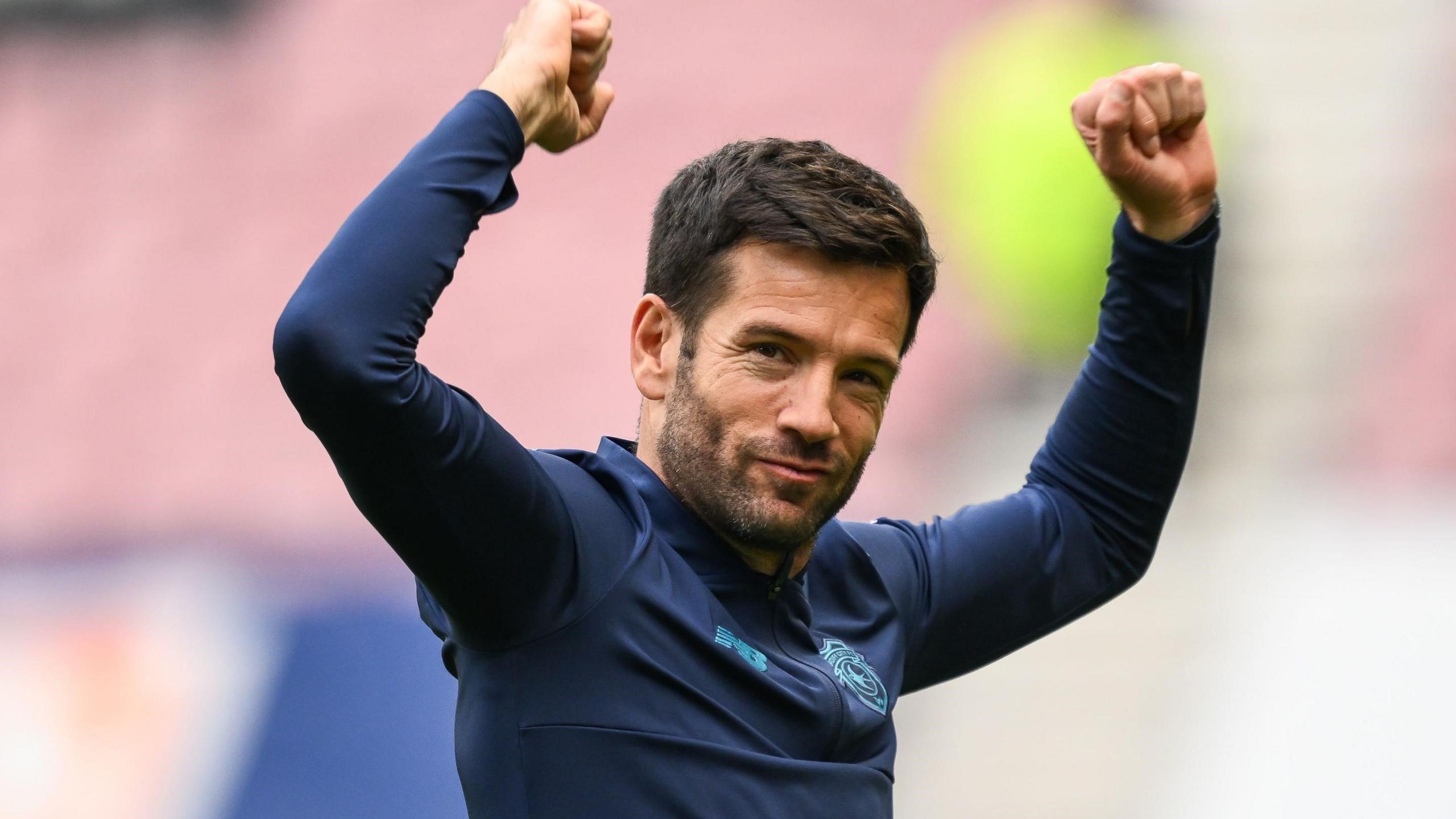
Cardiff have had next to no success when hiring managers for as long as I can remember, so now they finally have a (very) good one, I’ve been desperate to discuss it all with them. Here is my eagerly awaited, exclusive chat with the man of the moment; Brian Barry-Murphy.
It feels like you were associated with the Cardiff post for a few years before you actually got it, dating back to the days of Mick McCarthy. Was there any substance in those links, or was that just speculation and hearsay?
There was nothing in that. I would sometimes hear from people or my friends that Cardiff may be interested in you, but I never had any official contact with anyone.
I’ve heard you say that you were well aware of Cardiff’s youngsters in advance. Was that due to the preparation for your interview, due to your past experience in youth football or a bit of both and how did you approach your interview?
When I was at Manchester City, it was part of my job to be aware of young players nationwide and throughout Europe. All of those players were in a broad bracket from the age 18 to 21. In terms of my interview, I had a lot of questions that I wanted to ask the board because I had a perception of what Cardiff was and also an idea of what it could be.
When you take charge at a club, how much do you delve into the past, or how much do you wipe the slate clean and take players as you find them? Do you watch games from the previous season for context, or is that unnecessary and maybe even counterproductive?
I had seen quite a few games last season, so I had my own impression of the players as individuals and that was the most exciting part for me. There may be things that might crop up during the season and you wonder if it’s something that also happened last season, so you might speak to the players to get some feedback and that can help in certain situations.
Embed from Getty ImagesWhat you’ve achieved at Cardiff in such a short space of time is very impressive by any measure, but feels particularly impressive due to the context. This is a club that has burned through a lot of managers in recent years, signed different players for various ultimately failed ideas, while the development and confidence of those players has suffered. They’ve tried to play possession based football in the past and it has always been scrapped in favour of an understandably short-term approach. The fact that this group has thrived playing this way and so quickly therefore feels remarkable. Were you always going to play like this, or were you prepared to be more pragmatic based on the past?
I always wanted to give supporters an exciting game to watch and to have a go every week. I was pretty sure when I came here that the players were capable of doing what I wanted and that’s one of the reasons why I came. The likes of Rubin and Joel Colwill, Joel Bagan, Ronan Kpakio, Perry Ng and Ryan Wintle are all technical enough and I’ve been more impressed the more I’ve worked with these players. My feeling was that if we can give supporters a feeling of being genuinely excited when they come to the stadium, whether the style of play or individual players, any sense of sadness or disappointment from last year could be quickly erased. Thankfully, we got off to a flyer and that proved to be the case.
Do you think starting in League One, where the pace is maybe less intense and the standard a little lower, has aided that task than if you were trying to implement your ethos in the Championship? Would your approach have differed were Cardiff still in the second tier?
I would definitely have approached things in the same way, but I’m not naïve to the fact that playing in League One has probably helped. It may not be the same level of challenge, but it’s still a very difficult league and some of our players are still at such a young age that adapting as quickly as they have is a great achievement. Hopefully we can continue to improve and get stronger over the course of the season and beyond.
How did you approach the summer transfer window? From the outside, your approach seemed very patient and considered. Was that due to your faith in the existing group, a lack of value in the market or simply having to wait for the right players?
I was fully focussed on the players we had. When I first spoke to Vincent Tan, Mehmet Dalman, Ken Choo and the board, I spoke about all the players I believed in at Cardiff and how much they could do for the club, so if I came in and immediately started signing players, I would have given a very disingenuous interview. As we went through pre-season, I was always willing to add particular players if I believed we didn’t have a certain type in the squad or the academy. If you take Nathan Trott, he’s different to what we had. I know Omari Kellyman’s history and what he could do, but its all about potential with him and Gabriel Osho had qualities that were different to our other centre backs, even though I was blown away by Calum Chambers, Dylan Lawlor and Will Fish. I wanted to improve the squad selectively.
Embed from Getty ImagesCardiff are a relatively big fish in a small pond in League One and often face teams that defend very deep, which is a new challenge for them to face. If you shoot from distance, it tends to get blocked and with numbers back, your crosses often get headed away. Breaking down a team playing that way is not easy, so what have you found is best way to counter a low block?
We have to give the players as many tools as possible to overcome every situation they’re going to face. I had a lot of experience of this sort of situation at Manchester City and they would always try to create as much disturbance as possible by getting to the last line of the opponent as quickly as possible and I felt that was also what Cardiff needed.
I was really interested in your discussion with Nathan Blake on the Commentary Box podcast, about the rough treatment Yousef Salech has received at times this season. Supporters have been very frustrated with the lack of protection he has received from officials at times, but what Nathan said is that he needs to instead play a bit smarter and I think he has in recent weeks. As good as Yousef has been this year, and his new deal is a testament to that, I think his all-round game was possibly better last season playing at a higher level. In that respect, his brilliant goal against Leyton Orient felt like a throwback. How have you found working with Yousef and how has his game evolved during your time in charge?
Yousef is a very exciting player to watch due to the qualities he possesses. He’s very down to earth, studious about the game and always looking for ways to improve. The conversation with Nathan was based around Yousef becoming focussed on getting into physical battles with the centre backs he was facing, but I think he’s much more effective when he’s elusive and on the move. Then he can play the game on his terms. There’s also been a change this season and referees have been instructed to increase the threshold of contact and allow duels to continue. I think a lot of strikers have suffered because of that and Yousef has also been a victim of that, so its important that he focuses on his link up play and his running in behind, like you saw at Leyton Orient. He’s a very good player and always looking to improve.
Yousef is keeping Callum Robinson out of the side and he was probably Cardiff’s best player last year. One of the primary reasons why they went down in the end was because he was only available for half of the games. The fact that he’s fit and not playing therefore sometimes feels like a bit of a waste, but is a gift in terms of strength in depth. How do you manage having two strikers that both probably deserve and expect to start? Are you not tempted to utilise them as a pair more?
They were very effective as a pair against Stevenage. I think Callum has done really well and had a huge impact on our season, but he hasn’t played as much as he would like and I haven’t got him on the pitch as much as I would like, but that is down to the form of Yousef.
Embed from Getty ImagesCardiff were excellent in the first 30 minutes at Bradford on Saturday and some of the attacking football they played was brilliant. Is that the fruition of what you’ve been working towards and is playing that way more consistently, for sustained periods the ultimate goal?
I think we can improve a lot and I don’t just say that because I can see the improvement in individual players every day. It was an interesting period early in the game against Bradford because they’re a very aggressive team and the pitch was pretty poor, so you wouldn’t expect us to play so well. When I watched the game back in detail, we were quite rushed in the second half and didn’t play with the same composure, but the quality we showed in the first half will become more consistent and evident the more we practice it. That’s why I’m so demanding of the players because I know they can do it. We’re not where I want to be just yet, but that’s the most exciting part.
You’ve consistently rotated from the very beginning and it feels like it has paid dividends because it has kept the team fresh and despite a brutal schedule, the group have largely avoided injury. It’s a strong group and it feels like however you shuffle your pack, the strength of the group remains. Was that deliberate, or more a case of trying to keep everyone involved and happy?
It was only possible because of what I saw in training. When I first came in, it wasn’t something I was planning to do. I was aware that it wasn’t a big squad and I’m lucky I have a fitness guru as good as Kevin Gibbins, who advises me on training and we train very hard. When the season started and training was so competitive, it just wasn’t possible to have players not playing for prolonged spells. That leads to a very clear process where If they train that way, they get the chance to play, but if standards drop, they don’t.
The odd blip aside, the team has been very consistent this season and are currently in a very strong position. Have they exceeded your expectations and in turn raised the bar to some extent?
You can never guarantee results and we’ve won a lot of difficult games, but the potential of the players has been very clear since the start of pre-season, so I’ve not been surprised by the performance levels. If anything, it’s fuelled our desire to push them even harder. What we see in training, we sometimes see in games, but there is still enormous room for improvement and it’s our job to make it come to fruition sooner rather than later.
Just to finish up, I wanted to ask how you’ve found your time at Cardiff to date? Great form and results aside, how have you found the role, the challenge and the pressure of managing Cardiff? It’s a big job and was swallowed some managers whole in the past, but you’ve made it all look rather easy thus far!
It’s a brilliant place to be! It reminds me of being back home in Cork, the passion for the city and the club. I feel very comfortable. Obviously, when you lose games, we’re our own harshest critics, but the players always bounce back every single day and that makes being the coach so much easier.