
In an ideal world, Cardiff would already have a ready-made, in-house replacement for Ryan Wintle.
His departure could have coincided with the promotion of Charlie Crew, who has just turned 20 and would have been developing nicely in the background, with a handful of carefully selected senior games under his belt. Unfortunately, he left four years ago, way before ever getting even a sniff of the Cardiff first team. Welcome to the wonderful world of youth development and talent poaching.
There is nothing more dispiriting than a young player coming through the ranks at your club and you just know that they’ll get snapped up by a bigger beast in the football kingdom. All that potential will be realised, or not, somewhere else. These are life altering opportunities though, for the player and their families. It may be a one off proposal and you would be a fool to not accept it, but in the long run, who knows whether or not it’s the correct decision. Supporters insist that they would turn it down and remain loyal, but they wouldn’t in reality. When did you last turn down a promotion at work?
Using Crew as an example, he left at 16 and was likely offered terms at Leeds on a par with the likes of Rubin Colwill, Joel Bagan and Izaac Davies, all four years his senior and already in and around the Cardiff first team. Leeds were in a position to do that and the reality is that Cardiff were probably not. He was also joining a category one academy, which typically costs £3m-£5m more annually than a category two and has facilities to match. The flip side of that is that he’s only played for Leeds once and probably won’t play for them again any time soon, so his immediate future remains uncertain.
Embed from Getty ImagesGabriele Biancheri left Cardiff the following year for Manchester United, who has a famed academy and a reputation for promoting graduates. The bar is even higher there than at Leeds though and you wonder if he was signed with a view to eventually playing for the seniors, or merely to solidify their youth team. Time will tell and either way, he now has a European powerhouse on his CV and that will, along with the elite coaching he will have received, only aid his career path.
The reason we’re in this mess is largely down to Brexit. Premier League clubs are now on the outside looking in, so can no longer harvest the best young players across Europe and have instead had to set their sights domestically. There may be better prospects than Crew and Biancheri in their positions at 16 from Italy, Norway and France, but they’re out of bounds, so they cut their cloth accordingly. It creates a situation where players emerging at 15 and 16 are sure to be snapped up, but developing slightly later at 17 or 18 means you’re more likely to be looked over and remain with the club that has developed you.
How good a player will actually become is not an exact science and depends on a myriad of variables. Whether a player is developed too quickly, too slowly or at the right speed for them. Injuries, external factors, physical and mental development, plus luck. Its educated guesswork and a calculated financial risk. Can I afford to not sign this player for £1m when he might be worth £10m in two years time? The problem is that clubs have players farmed out all over the place, at different stages of development and while ultimately lucrative, it rarely seems to benefit the individuals.
Embed from Getty ImagesI can’t imagine Rabbi Matondo pictured his career taking in Schalke, Stoke, Cercle Brugge, Rangers, Hannover and Brann by the age of 25 when he joined Manchester City at 16. That is not his fault though, it’s just how the system tends to work and from Manchester City’s perspective, they made a huge profit on their investment, so it works just fine for them.
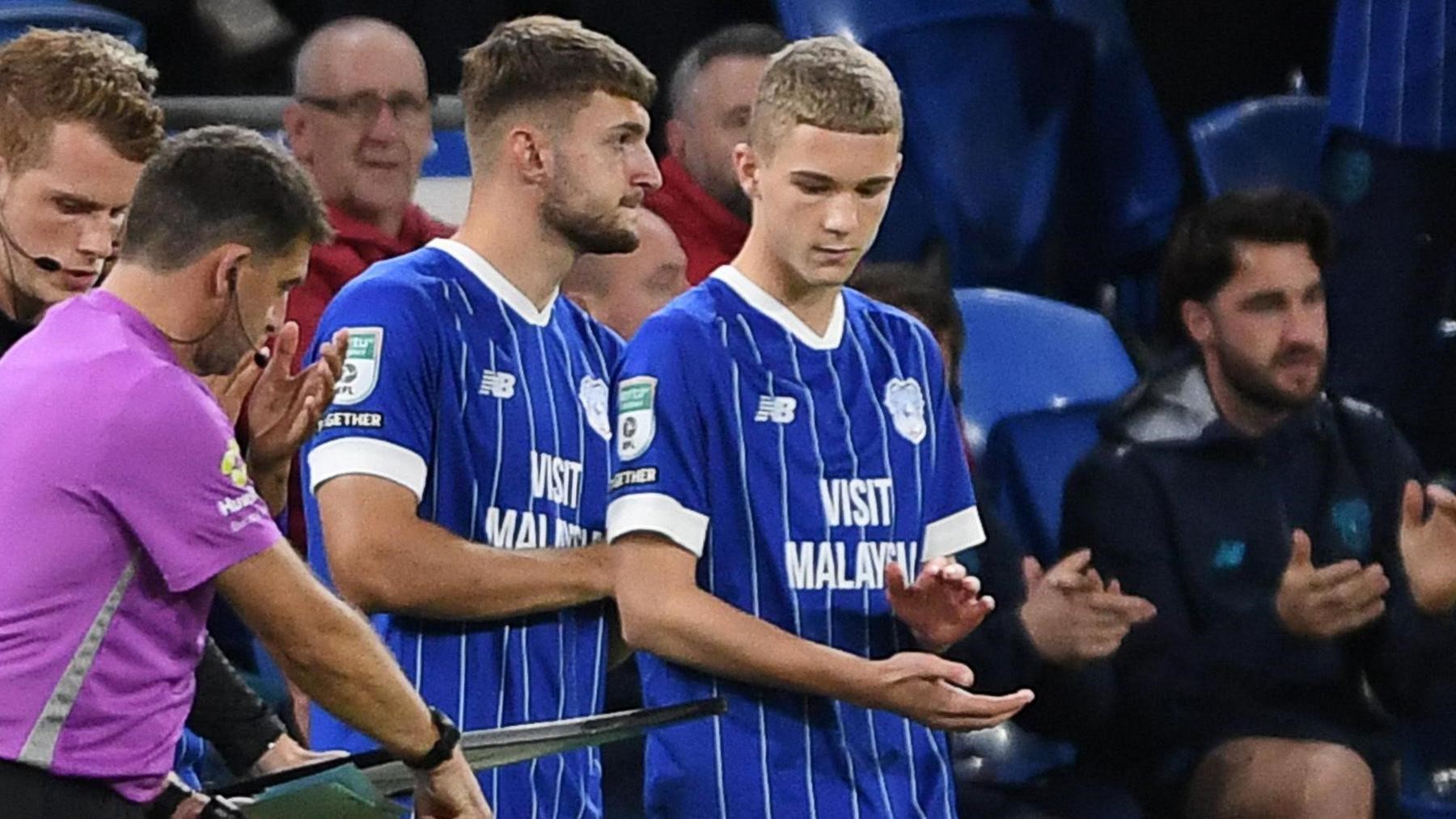
In terms of how good Donczew is, I couldn’t tell you. I’ve only seen him play a few times and that is the tragedy of these transfers for the supporters of the developing club. That they will make a name for themselves elsewhere and Cardiff only benefit in a relatively paltry financial way. They will receive an undisclosed compensation sum and hopefully there will be clauses that may be activated down the line, but when a player leaves at such an early stage in their promising career, there is no emotional compensation. It just feels grubby and demoralising. Also, how will those proceeds be used? To fund the ongoing running of the academy, to sign a choice category three replacement or to just be swallowed up by the ongoing running costs of the club as a whole? It’s unclear, but it would certainly be good to know.
The hope is that Donczew will emulate Aaron Ramsey, the gold standard from Cardiff’s academy and youth development in general, who went on to have a stellar career for club and country, while retaining a bond with the club that produced him. It also represents further proof that Cardiff’s academy is currently incredibly successful, with 33% of the minutes played in the first team last season coming from academy graduates. It just feels completely wrong that British clubs do not enjoy the same protection that European clubs have from Premier League prospectors. Until they do and that two year difference between 16 and 18 remains, academies will never truly enjoy the fruits of their own labour and clubs like Cardiff remain vulnerable to the inevitability of the football food chain.